
Who Do You Call When You Need a Carpenter?
(Hint: Not All Carpenters Do the Same Thing)
If you’ve ever searched “carpenter near me,” you’ve probably noticed something confusing:everyone calls themselves a carpenter — but not everyone does the same work.
And that’s usually where confusion starts.
“Carpenter” is a very broad term. At its core, it just means someone works with wood-based materials. Beyond that, there are many different specialties, each with their own tools, workflows, and areas of expertise.
So let’s break it down — and help you figure out who you actually need to call for your project.

Think of Carpenters Like Doctors
The easiest way to understand this is to think about healthcare.
A general contractor is a lot like your primary care physician. They oversee the big picture, coordinate specialists, and keep everything moving in the right order.
Carpenters, on the other hand, are specialists.
Just like doctors don’t all treat the same part of the body, carpenters don’t all do the same kind of work. Over time, most professionals find a niche — not because they can’t do everything, but because doing fewer things really well leads to better results.
Common Types of Carpenters (and What They Actually Do)
Here are some of the most common carpentry specialties homeowners encounter:
Framing Carpenters
These are the folks building the structure of the home — walls, floors, roofs. Their work happens early in construction and focuses on strength, layout, and code compliance.
Deck Builders & Exterior Carpenters
They specialize in outdoor structures like decks, porches, and pergolas. Different materials, different tools, and very different concerns than interior work.
Stair, Railing & Baluster Specialists
Stairs and railings are their own world. This work is highly regulated, extremely precise, and often handled by specialists who do only this type of carpentry.
Door & Window Installers
These carpenters focus on interior or exterior doors and windows, ensuring proper fit, operation, and weather performance.
Trim Carpenters
Trim carpenters handle baseboards, casing, crown molding, paneling, and accent walls. But even here, there’s an important distinction that often gets overlooked.
Not All Trim Carpentry Is the Same
Trim carpentry in new construction or commercial spaces looks very different from trim and cabinetry work done by a custom cabinet shop.
In many new construction or commercial environments:
Trim is cut and installed entirely on site
Materials are chosen for efficiency and repeatability
Pieces are often installed raw or primed
A separate painter comes in later to caulk, prep, and paint everything in place
This approach works well for large developments, office spaces, and projects where speed and scale matter most.
A custom cabinet shop operates differently.
In our world:
Components are designed, built, and fitted in a controlled shop environment
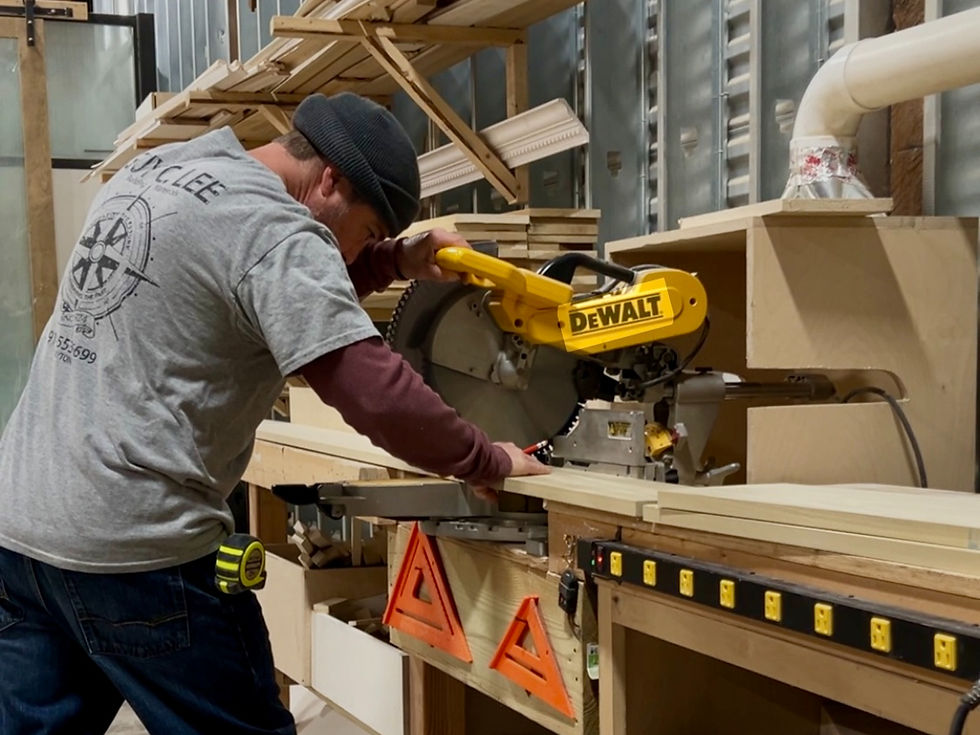
Precision cutting happens on professional machinery, not just jobsite saws
Finishes are applied before installation, in dedicated spray booths
Installation is more about assembling finished pieces than building everything from scratch on site
This method allows for tighter tolerances, cleaner finishes, and more complex designs — especially when the end goal is something that feels more like furniture than construction.
Neither approach is better or worse. They’re just built for very different outcomes.
So… What Kind of Carpenter Are We?
We specialize in brand-new, custom built-ins.
That’s our lane — and we stay in it on purpose.
Our work typically includes:
Built-in entertainment centers
Libraries and bookshelves
Built-in desks and home offices
Mudrooms
Benches
Large, wall-to-wall built-ins that are designed specifically for your space
These projects sit at the intersection of cabinetry, trim carpentry, and finish work. They require careful planning, in-house fabrication, and a high level of precision during installation.
What We Do (and What We Don’t)
What We Do
Custom built-ins designed for your home
In-shop fabrication for quality control
Finishing completed in a controlled environment
Installation by our own team
Some semi-custom options for kitchens and bathrooms
What We Don’t Do
Demo
Framing
Drywall
Flooring
Plumbing
Electrical
HVAC
Countertops
Wallpaper
Turnkey remodels
Those services are important — they’re just not our specialty.

Why We Don’t Try to Do Everything
After many years in business, we’ve learned this the hard way:
Trying to be a jack-of-all-trades usually means doing a lot of things okay — and very few things exceptionally well.
By focusing on custom built-ins and cabinetry:
Our team stays highly trained in one specialty
We invest in the right tools and equipment
Our processes stay efficient and repeatable
Quality stays consistent from project to project
We often work alongside general contractors, designers, electricians, plumbers, and other trades who are experts in their own fields. That collaboration is what leads to the best finished result.
So, Should You Call Raleigh Woodworks?
If your project involves:
Large custom built-ins
Integrated cabinetry
Furniture-quality finishes
Permanent storage solutions designed for your home
You’re in the right place.
If your project requires structural changes, multiple trades under one contract, or full remodel coordination, a general contractor is the best place to start — and we’re often brought in once the space is ready for built-ins.
Knowing who to call makes all the difference.
And now, you know exactly who we are.
Got Questions?
Schedule a call with one of our representatives to talk through your project.


Comments